Building a Memorable Brand Identity: A Step-by-Step Guide

A memorable brand identity gives your business a recognizable presence and a clear reason for customers to choose it. It connects strategy, messaging, design, and customer experience so every interaction feels like part of the same brand.
For founders and marketing teams, the goal is not simply to look polished. A strong identity should support differentiation, trust, and sustainable growth across websites, social media, advertising, sales materials, and customer touchpoints. The following six-step process takes you from strategic decisions to practical implementation.
What Is Brand Identity and Why Does It Matter?
Brand identity is the intentional system of strategy, messaging, personality, and visual elements a business uses to present itself. It shapes recognition and helps customers understand what the company stands for, who it serves, and why it is different.
Brand identity is often confused with related terms:
- Branding is the ongoing process of shaping how people experience and remember a business.
- Brand identity is what the business creates and controls, including its logo, language, color palette, typography, imagery, and behavior.
- Brand image is how customers actually perceive the business after their interactions with it.
The gap between identity and image matters. A company may describe itself as approachable and transparent, but confusing pricing or impersonal support can produce a very different brand image.
A cohesive identity supports growth marketing in several ways. Consistent creative makes campaigns easier to recognize, clear positioning improves message relevance, and a familiar experience reduces uncertainty during the buying process. Recognition alone does not guarantee conversions, but it can make every marketing touchpoint work harder over time.
Step 1: Clarify Your Brand Strategy and Positioning
To clarify your brand strategy and positioning, define your purpose, audience, differentiation, values, and unique value proposition before making visual decisions. These choices provide the criteria for every later identity decision.
Start with a short strategic foundation:
- Mission: What change does the business help create?
- Values: Which principles guide decisions, especially when trade-offs arise?
- Market position: What category do you operate in, and what space do you want to own?
- Differentiation: What can you deliver meaningfully better, faster, more simply, or more insightfully?
- Unique value proposition: Why should the right customer choose you instead of a credible alternative?
A useful positioning statement follows this structure: For [target audience] who need [important outcome], [brand] is the [category or solution] that provides [distinctive benefit] because [proof or reason to believe].
For example, a growth marketing agency might position itself for early-stage software companies that need measurable demand generation, emphasizing senior expertise and transparent experimentation rather than a large roster of disconnected services.
Keep the strategy specific enough to guide choices. If your values include clarity, your website should use plain language and transparent pricing where possible. If your positioning emphasizes premium expertise, a bargain-focused visual system may create confusion. Choosing a distinctive position means accepting that some prospects will not be the right fit.
Step 2: Understand Your Target Audience
To align identity with your target audience, study customer needs, motivations, language, objections, and buying context before choosing messages or design cues. Audience research turns branding from personal preference into a relevance decision.
Combine several sources rather than relying on assumptions:
- Interview current customers about why they chose you and what nearly stopped them.
- Review sales calls, support conversations, testimonials, surveys, and customer reviews.
- Analyze search queries, competitor messaging, community discussions, and campaign performance.
- Separate the economic buyer, daily user, internal champion, and other decision influencers.
Look for repeated phrases. Customers may describe your service as “easy to explain to leadership,” “fast to launch,” or “less risky than hiring internally.” Those phrases can inform your value proposition, brand voice, content themes, and visual signals.
Create a practical audience profile that includes the problem, desired outcome, emotional tension, proof required, and preferred communication style. A technical buyer may respond to evidence and precision, while a time-poor founder may need direct language and visible momentum. The identity can serve both audiences, but its hierarchy should reflect who makes the final decision.
Audience alignment does not mean copying customer language blindly. Research reveals expectations; your brand strategy decides how to meet or challenge them.
Step 3: Define Your Brand Personality and Voice
Your brand personality and voice define how the business sounds and behaves, while tone adjusts that voice for different situations. Clear personality traits make communication more recognizable across channels.
Choose three or four traits that are distinct and useful. “Professional” is too broad on its own. Combinations such as “clear, commercially curious, and candid” give writers and designers better direction.
Turn each trait into a practical rule:
- Clear: Lead with the answer, avoid unnecessary jargon, and explain specialist terms.
- Candid: State limitations, trade-offs, and evidence instead of making inflated promises.
- Commercially curious: Connect recommendations to customer outcomes and measurable business goals.
Next, document voice principles and examples. Explain what the brand says, how it says it, and what it avoids. Include examples for a landing-page headline, social post, sales email, error message, and difficult customer-service response.
Voice should remain recognizable while tone changes. A product launch can sound energetic; a billing problem should sound calm and accountable. Consistency does not require every sentence to sound identical. It requires the same underlying character.
Step 4: Build the Visual Identity
To build a visual identity, translate your strategy and audience insight into a coordinated system of logo design, color, typography, imagery, layout, and graphic elements. Each component should perform a communication job, not merely decorate a page.
Develop the core visual elements
- Logo design: Create a distinctive mark and wordmark that remain legible in realistic uses, from a website header to a small social avatar.
- Color palette: Select primary, secondary, and functional colors with accessibility and contrast in mind. Color should signal the desired mood and help users navigate.
- Typography: Choose typefaces for readability, hierarchy, and personality. Define heading, body, label, and button treatments.
- Imagery: Decide whether photography, illustration, product screenshots, or a combination best supports your positioning.
- Layout: Establish spacing, grids, borders, shapes, and content hierarchy so materials feel related even when formats change.
Build from meaning to execution. A fintech brand promising control and transparency may need strong hierarchy, accessible contrast, and evidence-led imagery. A creative consultancy may allow more expressive composition, but still needs rules that protect readability.
Test the system in context before approving it. Place the identity on a mobile landing page, paid advertisement, proposal, presentation, and dark-background application. A logo that looks impressive on a large white canvas may fail at 24 pixels. A bright color palette may attract attention but reduce readability or become expensive to reproduce in print.
Step 5: Create Brand Guidelines and Apply Them Consistently
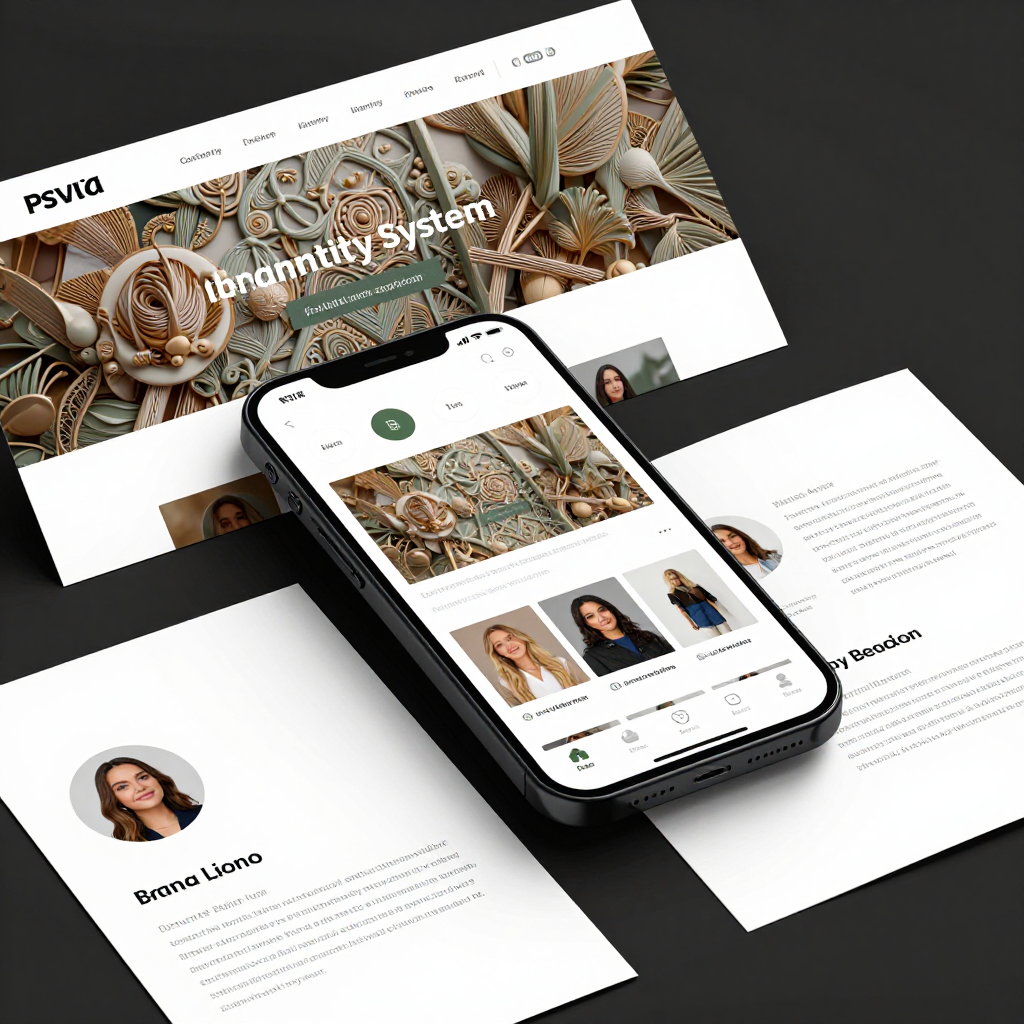
Brand guidelines document how to use your identity consistently across owned, paid, and customer-facing channels. They turn strategic intent into repeatable decisions for employees, freelancers, agencies, and partners.
A useful guide should include:
- Brand strategy summary, positioning, audience, values, and unique value proposition.
- Brand personality, voice principles, tone variations, and messaging examples.
- Logo versions, clear space, minimum size, approved backgrounds, and incorrect uses.
- Color codes for digital and print applications, plus accessibility guidance.
- Typography hierarchy, font licensing details, and fallback choices.
- Photography, illustration, icon, layout, and motion principles.
- Examples for websites, social media, advertising, email, sales materials, and support content.
Keep the guide usable. A 10-page document with clear examples is often more effective than a 70-page manual nobody opens. Store approved assets in one accessible location and assign ownership for updates.
Consistency should be measured at the customer level. Audit the first five touchpoints a prospect encounters, such as a search ad, landing page, sales deck, email, and onboarding screen. If each looks or sounds like it came from a different company, the issue is operational, not simply creative.
Step 6: Launch, Measure, and Refine Your Brand Identity
To launch and improve your brand identity, roll it out in controlled stages, monitor customer and marketing signals, and refine elements that create confusion or weaken performance. Brand identity is an operating system that should evolve with evidence.
Use a practical rollout sequence:
- Finalize the strategy, identity system, and guidelines.
- Update high-traffic assets first: website, key landing pages, social profiles, and sales materials.
- Brief internal teams and explain the reasoning behind major changes.
- Launch campaigns with clear baseline metrics for reach, engagement, qualified leads, conversion rate, and customer feedback.
- Review results after a meaningful test period, then prioritize improvements.
Track both perception and performance. Qualitative signals include customer interviews, message recall, sales objections, support feedback, and whether prospects describe your value accurately. Marketing signals can include branded search activity, direct traffic, ad engagement, landing-page conversion, lead quality, and retention. These metrics have many causes, so avoid claiming that a visual refresh alone created an outcome.
Use an identity audit every quarter or after a major offer, audience, or channel change. Score each touchpoint from one to five for strategic alignment, recognition, clarity, consistency, and accessibility. Fix the lowest-scoring high-impact asset first.
Frequently Asked Questions About Brand Identity
What is the difference between brand identity and brand image?
Brand identity is what a company intentionally creates, while brand image is how customers perceive and remember it. Research, customer experience, and consistent delivery determine how closely the two match.
How long does it take to build a brand identity?
A focused identity project may take four to twelve weeks, depending on research depth, stakeholder involvement, number of deliverables, and approval speed. A complete transformation across multiple markets and channels can take longer.
What should brand guidelines include?
Brand guidelines should cover positioning, audience, personality, voice, messaging, logo use, color palette, typography, imagery, layout, accessibility, approved assets, and real channel examples.
Can a small business create a strong brand identity with a limited budget?
Yes. A small business can begin with clear positioning, a simple logo system, a focused color palette, readable typography, practical voice rules, and consistent templates. Spend first on strategic clarity and high-use customer touchpoints rather than producing every possible asset.
A memorable brand identity emerges when strategy, audience understanding, personality, design, and customer experience reinforce one another. Build the system in sequence, document it clearly, and use real market feedback to make the next version stronger.